
2021
Gett All-In
Enterprise SaaS
Gett’s support agents were resolving ride issues across disconnected legacy tools. Each case required switching between systems, reconstructing context, and manually piecing together what happened.
I redesigned it into a unified workspace for ride details, driver assignment, billing adjustments, and customer communication. The goal was to cut handle time giving agents full case story and the right actions in one place.
Industry
Banking
Role
Enterprise Design Lead
Focus
Support Operations, Workflow Redesign, Design Systems

Business problem
Support agents had to resolve one customer issue across multiple legacy systems, creating slow handling, context-switching, avoidable errors, and low CSAT.
Design response
I unified the core support tools into one workspace, introduced a visual ride timeline, and established reusable patterns through Gett.UI.
Business result
The redesign reduced handling time, cut assignment errors, and gave agents a faster way to understand and resolve ride issues.
62%
Less Handling Time
21 pts
Higher CSAT
23%
Fewer Agent Errors

Support agents were resolving complex ride issues across several disconnected tools. To understand one case, they had to reconstruct the ride from scattered data: passenger messages, driver status, billing events, route changes, and assignment history. The cost showed up in handle time, errors, and CSAT.
The goal was to cut average handle time in half without reducing service quality.


Drag to compare the old fragmented ride details view with the redesigned support workspace.
The Real Work Was Reconstructing Context
I spent time in Gett’s customer support hall in Tel Aviv, watching agents handle live cases. The eureka moment was seeing how much of the work happened outside the interface.
Experienced agents had to rebuild the customer story manually: what happened, when it happened, who was involved, and which action should come next. The product needed to make that context visible, so agents could resolve cases without piecing everything together from scratch.
The Cost of Inconsistent Tools
The operational problem was not limited to agents. Internally, inconsistent UI patterns slowed feature development, created accessibility rework, and made onboarding harder. Teams were solving the same interface problems repeatedly instead of improving the support workflow.
A Shared System for Support Work
The opportunity was to solve the workflow and the UI system together. A unified portal could reduce agent effort, while shared patterns could make future support tools faster to build and easier to maintain.
Buildinga Unified
Support Workspace
We brought the core support actions into one workspace. Driver assignment, billing adjustments, passenger communication, and ride history no longer lived as separate fragments. Agents could see the case context and act on it without jumping between tools.
The same redesign also established shared interaction patterns, visual rules, and information architecture for future support products.
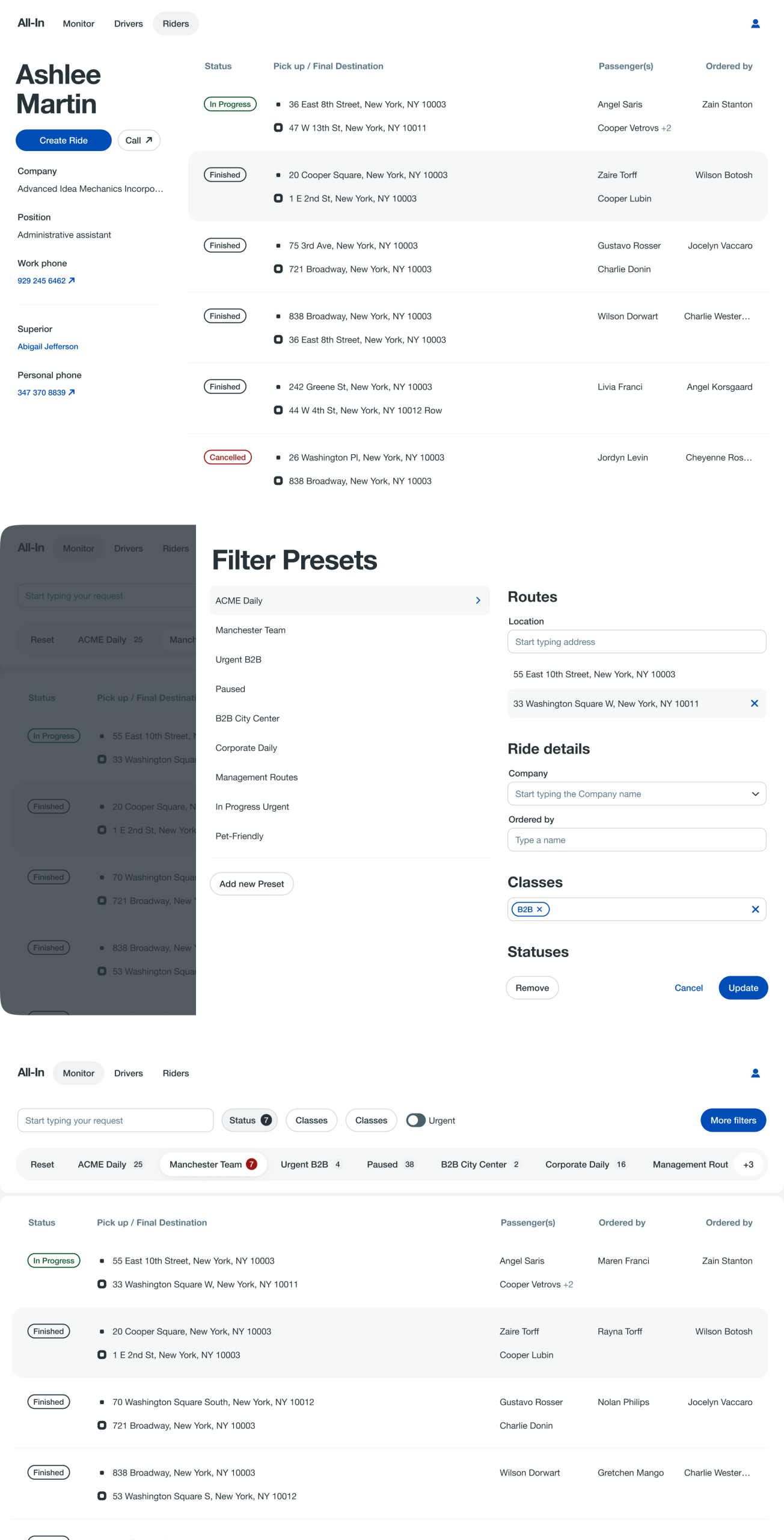
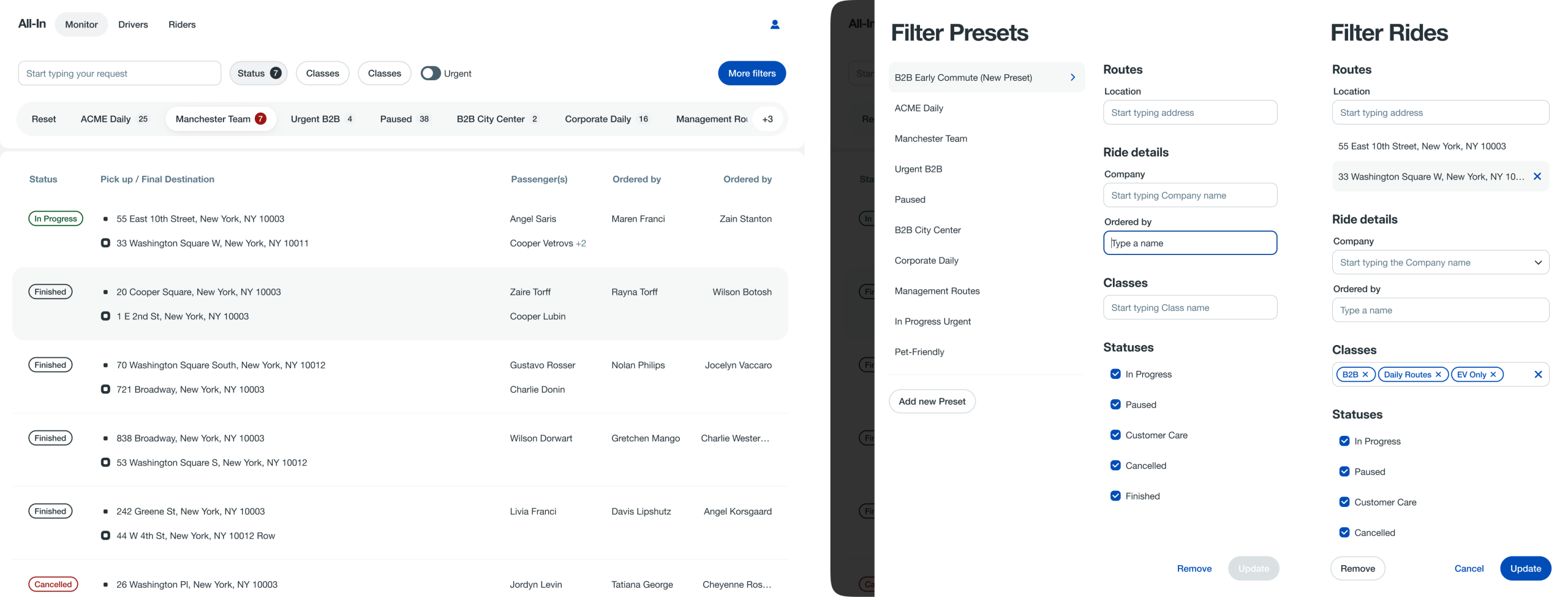
The monitoring view gave agents visibility across active rides, but made the scale manageable. Filters and ownership rules helped each team focus on the customers, issues, and ride classes they were responsible for, turning a global operations view into a practical working queue.
Global Visibility,
Focused Queues
Administrators could create customer groups, assign them to agents, and share ownership across teams. Instead of asking agents to scan everything, the system created focused queues around responsibility. That made operational coverage clearer and reduced unnecessary context-switching.
Driver Profiles
With Operational Context
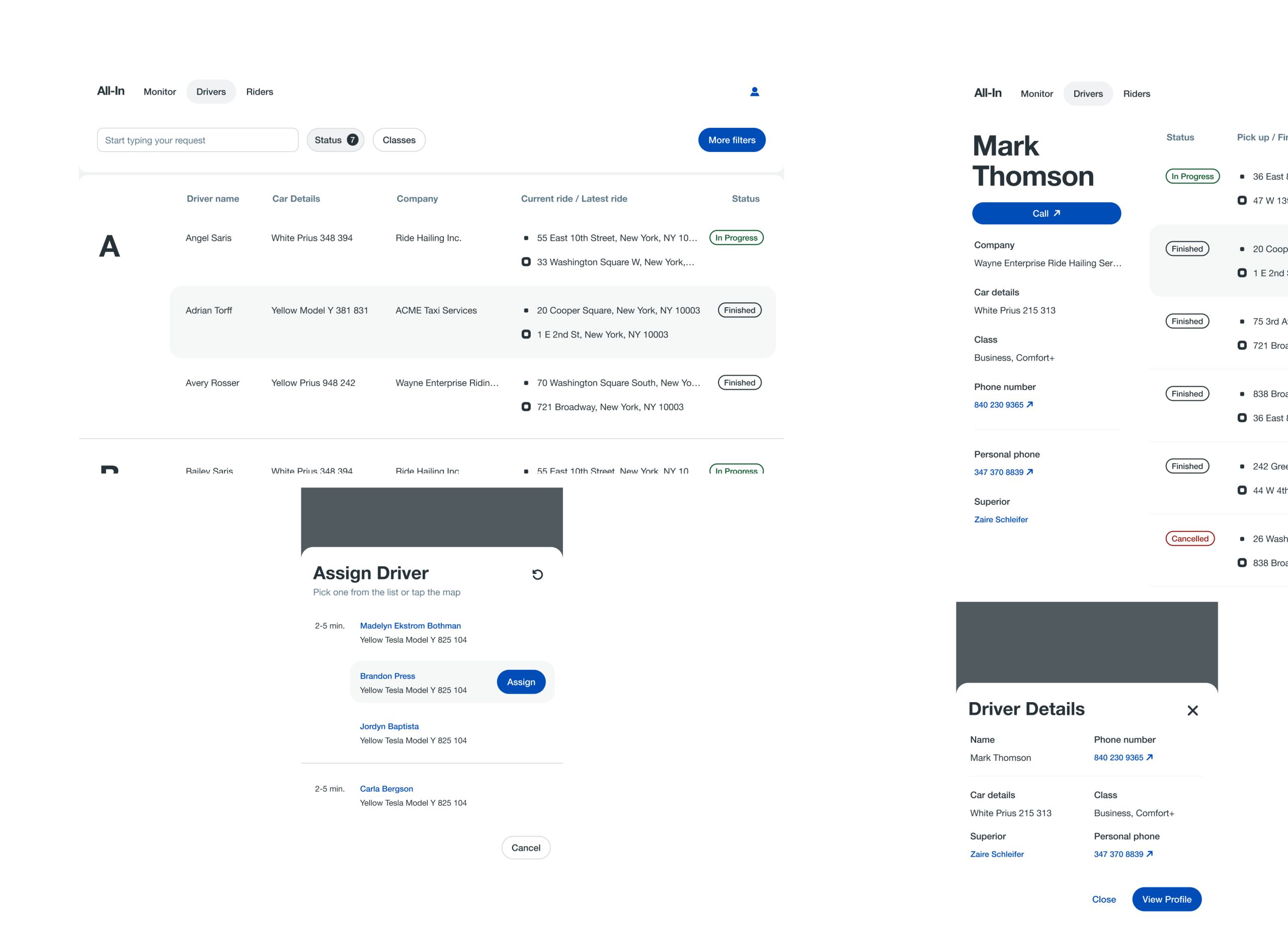
Driver profiles became operational surfaces. Agents could open a driver profile, review ride history, check relevant details, and call directly from the same workspace. That reduced lookup time and kept resolution actions close to context.
A Timeline
for Faster Case Resolution
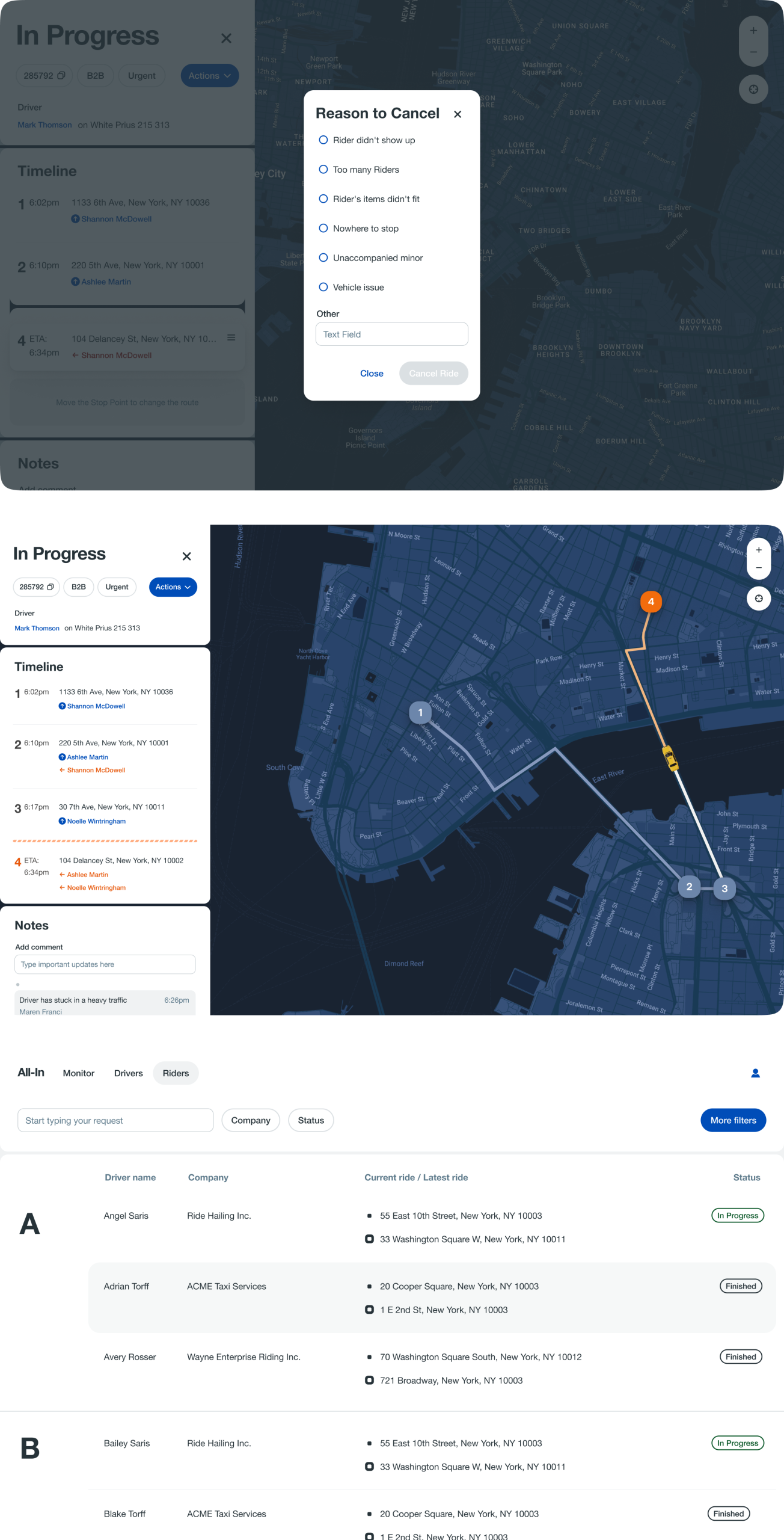
The ride timeline became the core decision surface. Instead of forcing agents to assemble the story from scattered records, the redesigned view showed events chronologically: route changes, driver assignment, customer communication, billing updates, and ride status.
Agents could understand what happened, spot problems faster, and take action in context, including adding destination points or reassigning a driver without leaving the flow.
Ride details became editable in context. Agents could add destination points or assign a new driver directly from the timeline, without cancelling the ride or leaving the case flow. The timeline kept the ride history and the next action in the same place.
Outcome
Average handle time dropped from over four minutes to ninety seconds, a 62% reduction that beat the original 50% target. CSAT increased by 21 points to 89%, and assignment errors dropped by 23%.
The redesign also reduced context-switching and became a proof point for Gett.UI, showing that a shared design system could improve both product quality and delivery speed. The main lesson was operational: agents did not need more tools. They needed one workspace that showed the story, exposed the right actions, and removed the work around the work.
Fighting a system
of systems?
If your people are juggling multiple tools to do one job, I can help design a single, coherent experience. Let's talk.